Asymmetric Membranes
All plasma membranes - the outer "envelope" of every cell - are asymmetric. This means that the lipids on the inside and outside of the membrane are chemically different. Cells invest a great deal of energy in building and maintaining this asymmetry. Why they do this is the subject of intense research. Diseased cells often have an altered lipid pattern or, like cancer cells, lose their asymmetry. We may even be able to reverse pathological processes by targeting membrane asymmetry.
How asymmetric membranes work
We want to find out how one side of the membrane affects the other and how membrane proteins respond. This will give us a better understanding of how signals are transmitted across the plasma membrane.
Our research shows that lipids can influence the opposite side of the membrane in different ways - for example, by making it tighter or looser. In addition, asymmetric membranes often have a much higher bending strength than symmetric ones. By measuring the function of proteins in such membranes, we can directly relate changes to these particular membrane properties.
Publications:
- Pabst, & Keller, Trends Biochem Sci, 49: 333 -345 (2024) DOI: 10.1016/j.tibs.2024.01.007
- Schütz & Pabst, BioEssays 45: 2300116 (2023) DOI: 10.1002/bies.202300116
- Marquardt et al. Membranes 5: 180 - 196 (2015). DOI: 10.3390/membranes5020180
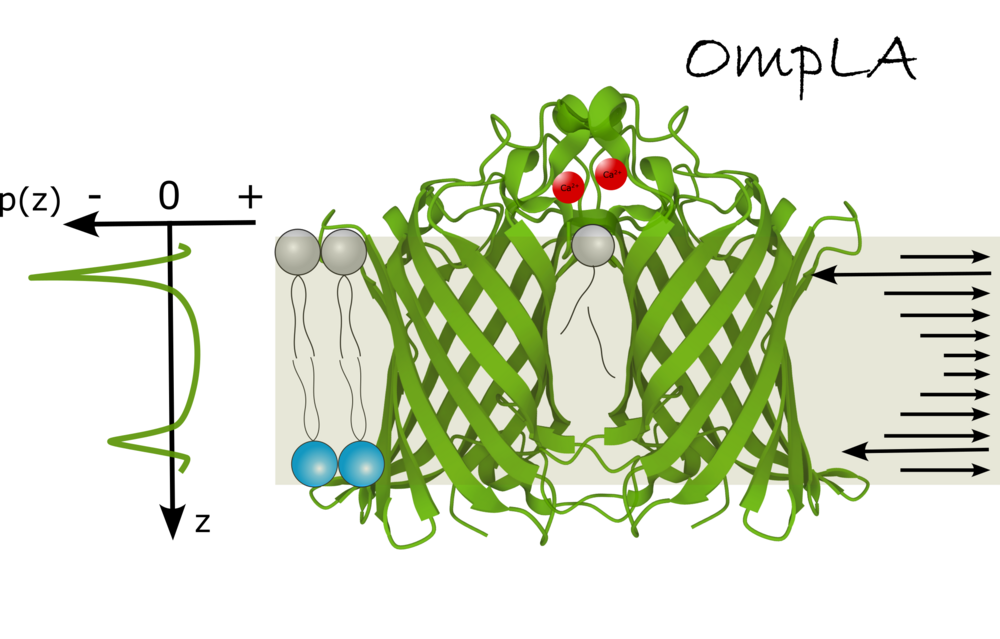
Design: P. Piller
Examples
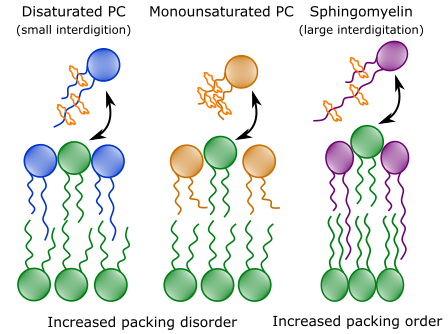
From: Frewein et al, JMB (2022), License: (CC-BY 4.0 DEED).
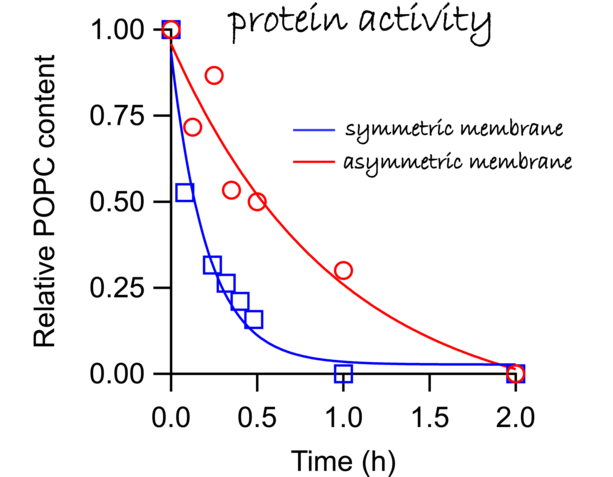
From: Pabst & Keller, TIBS (2024), License: (CC-BY 4.0 DEED).
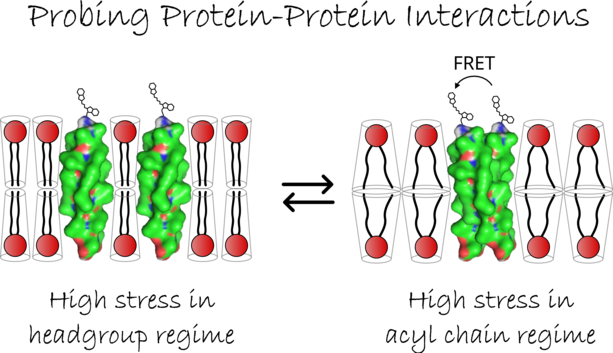
Design: M. Kaltenegger