Begin of page section:
Page sections:

  • Go to contents (Accesskey 1)
  • Go to position marker (Accesskey 2)
  • Go to main navigation (Accesskey 3)
  • Go to sub navigation (Accesskey 4)
  • Go to additional information (Accesskey 5)
  • Go to page settings (user/language) (Accesskey 8)
  • Go to search (Accesskey 9)

End of this page section. Go to overview of page sections

Begin of page section:
Page settings:

English en
Deutsch de
Search
Login

End of this page section. Go to overview of page sections

Begin of page section:
Search:

Search for details about Uni Graz
Close

End of this page section. Go to overview of page sections


Search

Begin of page section:
Main navigation:

Page navigation:

  • Studies
  • Teaching

    Teaching
    • Teachers
    • Services
    • Cooperation
  • Researching

    Researching
    • Research
    • Organisation plan
    • Cooperation
  • Collaborating

    Collaborating
    • Activities connected to the university
    • Services
    • Staff members
  • University

    University
    • Information
    • Interdisciplinary affairs
    • Connected Activities
Close menu

End of this page section. Go to overview of page sections

Begin of page section:
You are here:

University of Graz Pabst, Georg, Assoz. Prof. Dipl.-Ing. Dr.techn. Research Bottom-Up Membranmodelle
  • Homepage
  • Academic Curriculum Vitae
  • Team
  • Research
  • Teaching & Supervision
  • Publications
  • Contact
  • 19th Christmas Biophysics Workshop

End of this page section. Go to overview of page sections

Begin of page section:
Sub navigation:

  • Homepage
  • Academic Curriculum Vitae
  • Team
  • Research
  • Teaching & Supervision
  • Publications
  • Contact
  • 19th Christmas Biophysics Workshop

End of this page section. Go to overview of page sections

Bottom-Up Membrane Models

Cell membranes are made up of thousands and thousands of different membrane lipids and membrane proteins. Their exact composition changes constantly. Because of this complexity, it is not possible to study the exact molecular relationships in living membranes. Therefore, we reconstruct biological membranes with as few but important components as possible. With this "bottom-up" strategy, we can determine exactly what "our" membranes are made of. This means that membrane properties (thickness, elasticity, etc.) can be traced back to their molecular components. We make sure that our artificial membranes are as close to the original as possible.

Production of asymmetric membranes

In our laboratory we have co-developed a method to produce membranes with asymmetric composition. We use cyclodextrin to exchange lipids in the outer layer of the membranes (about 100 nm liposomes). The advantage of this method is that it works with many different lipids. We can also incorporate membrane proteins into these special membranes. We have published our exact procedure in the journal Nature Protocols. However, we are still working on improving the method.

Publications:

  • Piller et al., PNAS Nexus 2: 1 – 7 (2023). DOI: 10.1093/pnasnexus/pgad126.
  • Doktorova et al., Nat. Protoc. 13, 2086 - 2101 (2018). DOI: 10.1038/s41596-018-0033-6
  • Heberle, et al., Langmuir 32: 5195 – 5200 (2016). DOI: 10.1021/acs.langmuir.5b04562


Schema zur Herstellung asymmetrischer Membranen ©Georg Pabst
©Georg Pabst
Schematische Darstellung der Herstellung asymmetrischer Membranen.
Design: Georg Pabst

Examples

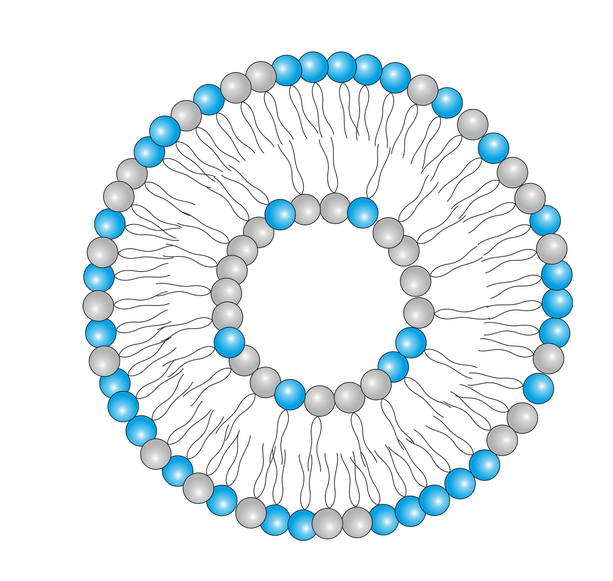
symmetrisches Vesikel
Large unilamellar vesicle (LUV)
Design: Paulina Piller
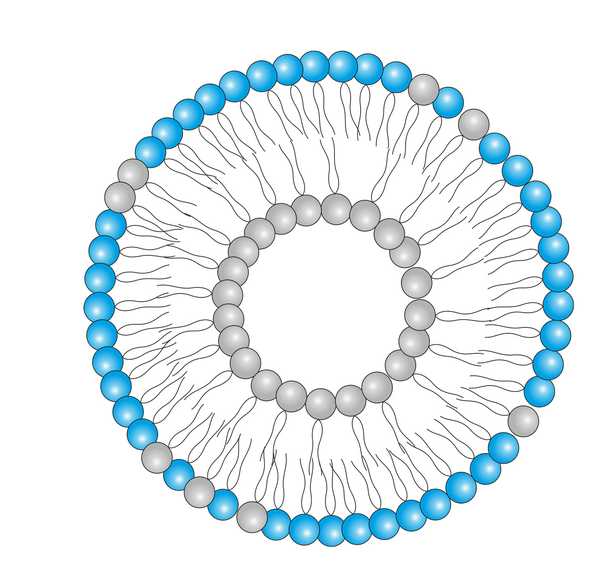
asymmetrisches Vesikel
Asymmetric large unilamellar vesicle (aLUV)
Design: Paulina Piller
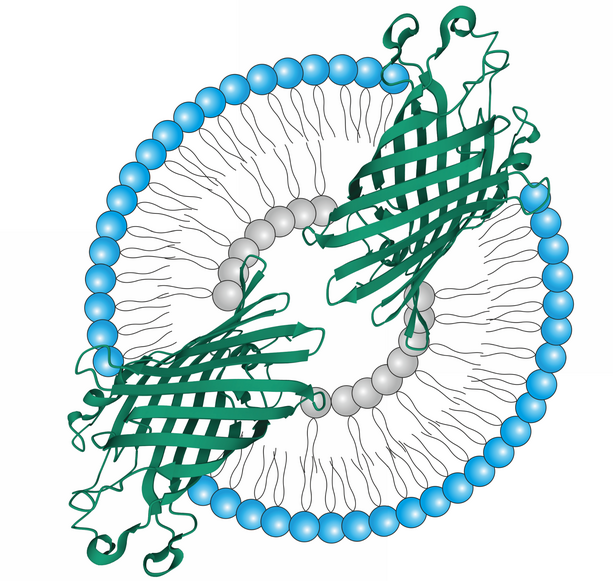
Asymmetrisches Vesikel mit Protein
Asymmetric proteoliposome (aPLUV)
Design: Paulina Piller

See also

  • Publication Highlights
  • Other research areas

Begin of page section:
Additional information:

University of Graz
Universitaetsplatz 3
8010 Graz
Austria
  • Contact
  • Web Editors
  • Moodle
  • UNIGRAZonline
  • Imprint
  • Data Protection Declaration
  • Accessibility Declaration
Weatherstation
Uni Graz

End of this page section. Go to overview of page sections

End of this page section. Go to overview of page sections

Begin of page section:

End of this page section. Go to overview of page sections