Project Overview
- PROJECT TITLE: Socio-psychological aspects of Long-Term High-impact decisions of private forest and home owners (SLOTH)
- PROJECT TEAM: University of Graz: Assoc. Prof. Dr. Thomas Brudermann; Annechien Drikje Brudermann, PhD; Katharina Trimmel, Dipl.-Ing.; Romana Schweiger, MSc.
- PARTNERS: Joint research by University of Graz (Austria) and University of Primorska (Slovenia)
- DURATION: 2025-2028
- FUNDING: Bilateral project funded by FWF (Austria) and Aris (Slovenia)
- POJECT AIM: Investigation of decision making with long time horizons and large impacts, with a focus on house builders and forest owners
Project Details
Project background
Effective climate change mitigation and adaptation depend on long-term decision making—decisions taken today whose benefits unfold over decades. Yet most models of human decision making focus on short-term outcomes, and people tend to discount distant future impacts. This mismatch poses a major challenge for climate action, which often requires immediate investments and behavioural changes that only pay off in the long run.
Some societal actors, however, are structurally required to think in long time horizons. Private forest owners and private home owners routinely make decisions whose consequences extend far into the future. Forest management decisions affect economic returns, ecosystem services, and climate impacts decades ahead, while building and renovation decisions determine the resilience, emissions, and value of homes over their entire life cycle.
Project aim
The project aims to better understand how long-term climate mitigation and adaptation decisions are made, both deliberately and unintentionally, and to identify the factors that enable or hinder such decisions. Focusing on private forest owners and private home owners, the project examines how long-term considerations interact with economic, social, and psychological factors under changing climate conditions.
Methods and approach
The project applies a mixed-methods approach, combining:
- qualitative social science methods (interviews and focus groups),
- quantitative methods (surveys), and
- tools from environmental sciences, such as life cycle assessment.
This interdisciplinary approach allows the project to link decision-making processes with their environmental impacts.
Expected outcomes
A central outcome of the project is the development of a decision-making model that helps to explain and guide long-term, high-impact decisions in climate mitigation and adaptation. The project will:
- identify decisions with the highest mitigation and adaptation potential,
- analyse synergies and trade-offs between different decisions, and
- determine key factors that support long-term decision making.
Dissemination and impact
Project management, communication, and dissemination activities run throughout the project to ensure effective collaboration and knowledge exchange. Results will be presented at scientific conferences, published in peer-reviewed journals, and shared openly through data repositories. Beyond its applied relevance, the project contributes to advancing research in cognitive and social psychology, as well as climate and environmental psychology and sociology.
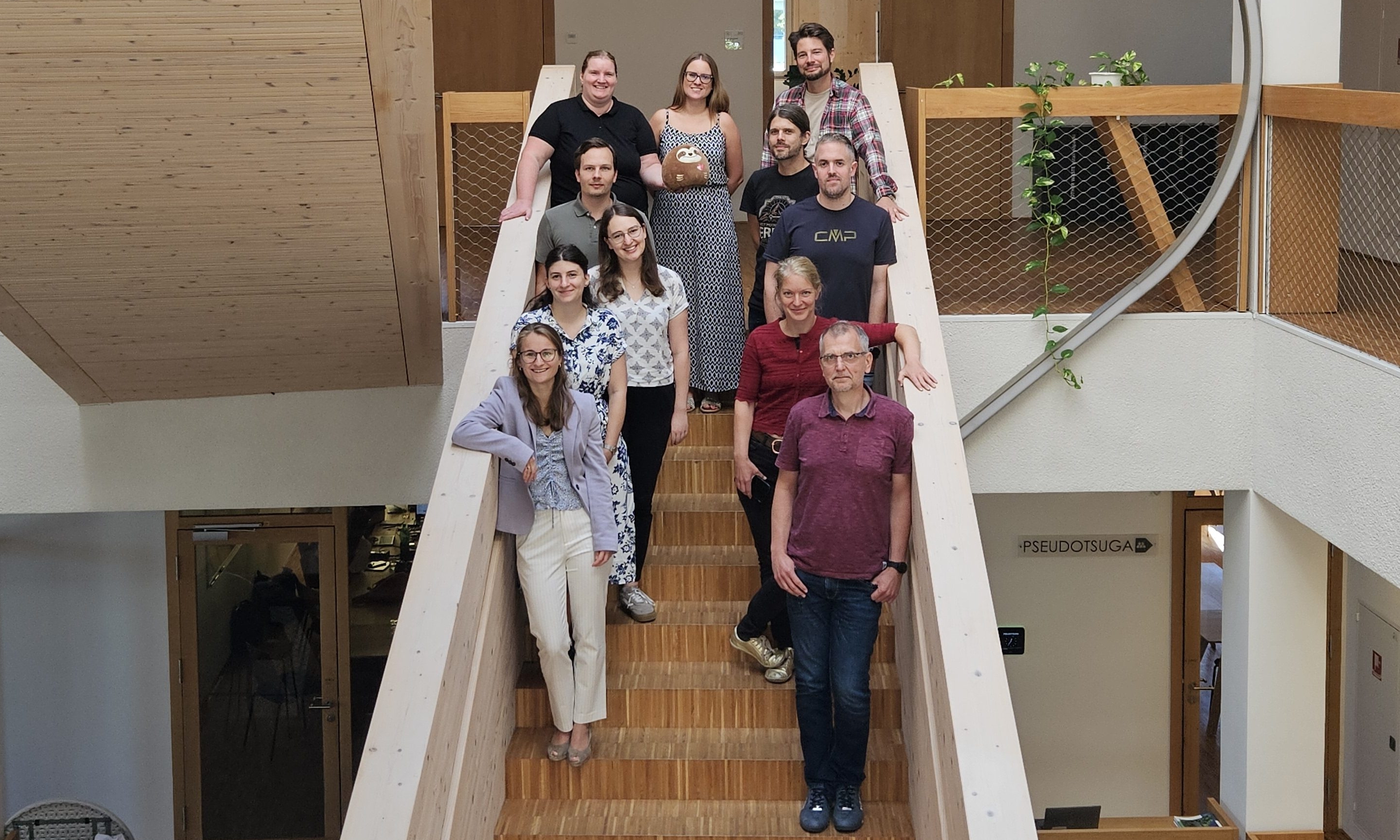
First project partner meeting – Kick off in Izola (Slovenia)
The project partners of Socio-psychological aspects of Long-Term High-impact decisions of private forest and home owners (SLOTH) came together for their kick-off meeting at InnoRenew CoE, marking the official start of the project.
Over two intensive days, the teams exchanged ideas and aligned their perspectives on key stakeholder decisions, an essential part of the project’s first research phase. SLOTH aims to better understand how long-term climate mitigation and adaptation decisions are made, consciously and unconsciously, and which psychological and social factors shape these choices. A central topic of discussion was the planning of upcoming focus groups and interviews, which will play a key role in guiding the project’s next steps.
The second day offered further opportunities for exchange, with presentations from colleagues involved in related projects. The meeting concluded with a tour of the InnoRenew CoE laboratories, giving the partners valuable insights into the centre’s research environment and ongoing work.
Project outcomes
Conceptualizing long-term decision making
The initial phase of the project focused on establishing a shared understanding of long-term decision-making and on developing the conceptual foundation for the empirical work that follows. This phase aims to develop a conceptual model of what factors influence long-term high-impact decision making.
To this end, the project combines a systematic literature review (SLR) with semi-structured interviews in order to examine how long-term mitigation and adaptation decisions are made and which factors shape these decisions across different contexts.
The literature review followed the PRISMA guidelines and included studies from multiple disciplines, such as psychology and behavioural economics. An initial search yielded 408 articles. After screening and eligibility assessment, 107 studies were analysed with respect to their research questions, methodologies, decisions and identified influencing factors.
Research findings are highly heterogenous due to inconsistent operationalization, yet some robust patterns emerge across studies:
- At the individual level, education, financial capacity, and efficacy beliefs (especially self- and response efficacy) consistently support long-term decision making, while conservative political orientation tends to be negatively associated
- Long-term orientation constructs (e.g. future self-continuity, legacy motives) are rarely examined but show promising positive effects
- At the collective level, long-term decisions are shaped by policy and incentive design, economic conditions, and social context, with outcomes strongly context-dependent
The literature review is complemented by semi-structured interviews with private forest owners and home owners in Austria and Slovenia, conducted in spring 2026.